Hi-vis workwear standards: EN ISO 20471 vs ANSI/ISEA 107
What the classes mean, how much fluorescent and reflective material each one needs, and what to put on a purchase order for custom hi-vis vests, jackets, polos and trousers.
In short
Europe, the UK and many export markets use EN ISO 20471, which sets three classes by the minimum area of fluorescent background and retro-reflective tape a garment shows. North America uses ANSI/ISEA 107, which adds garment types for off-road, roadway and public-safety work. Australia and New Zealand use AS/NZS 4602.1. Blackthorn World makes custom hi-vis workwear to the class you specify, using compliant fluorescent fabric and retro-reflective tape, with your logo and private label.
- Europe / UK
- EN ISO 20471 — Class 1, 2 and 3
- USA / Canada
- ANSI/ISEA 107 — Types O, R, P; Classes 1, 2, 3 (CSA Z96 in Canada)
- Australia / NZ
- AS/NZS 4602.1 — day (D), night (N) and day/night (D/N)
- Products
- Hi-vis vests, jackets & tops, coveralls & trousers
- Branding
- Your logo, private label, hang tags and packaging
- Production
- Blackthorn World’s own factory — export orders only
Why the class matters
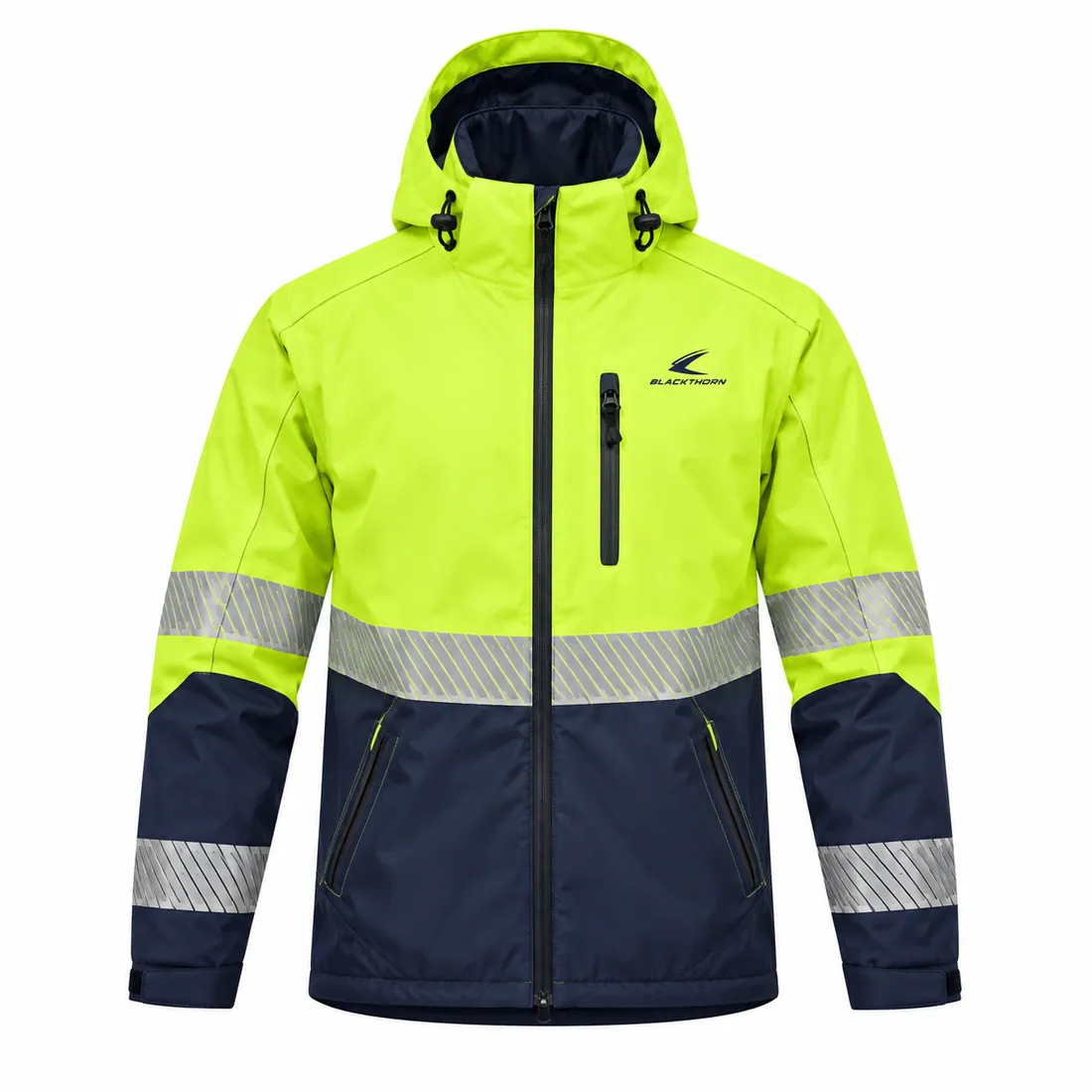
A hi-vis garment is only as safe as the amount of material a driver can see. Both main standards therefore set minimum visible areas: fluorescent background material for daylight visibility and retro-reflective tape that bounces headlight back at night. A higher class means more of both — and more coverage of the body, usually adding sleeves or trousers.
EN ISO 20471 classes (Europe, UK and export markets)
| Class | Min. fluorescent background | Min. retro-reflective | Typical garments |
|---|---|---|---|
| Class 3 | 0.80 m² | 0.20 m² | Long-sleeve jackets, coveralls, jacket + trouser combinations |
| Class 2 | 0.50 m² | 0.13 m² | Vests, short-sleeve polos and T-shirts, bib trousers |
| Class 1 | 0.14 m² | 0.10 m² | Trousers or shorts on their own, harness-style items |
Background colors allowed by EN ISO 20471 are fluorescent yellow, fluorescent orange-red and fluorescent red. Reflective bands are at least 50 mm wide. Two garments worn together, such as a Class 2 jacket and Class 1 trousers, can reach Class 3 as an ensemble when they are labelled and tested that way.
ANSI/ISEA 107 types and classes (USA and Canada)
| Performance class | Min. background | Min. retro-reflective | Typical use |
|---|---|---|---|
| Class 3 | 1,240 in² | 310 in² | Highway and roadway work at higher traffic speeds, low visibility |
| Class 2 | 775 in² | 201 in² | Roadway work, utilities, parking and transport |
| Class 1 | 217 in² | 155 in² | Off-road work away from traffic (Type O only) |
ANSI/ISEA 107 also groups garments by type: Type O (off-road, Class 1), Type R (roadway, Class 2 or 3) and Type P (public safety, such as police and emergency responders). Background colors are fluorescent yellow-green, fluorescent orange-red and fluorescent red. In Canada, CSA Z96 is the equivalent national standard.
What to specify on a custom hi-vis order
- Market and standard — EN ISO 20471, ANSI/ISEA 107 (with type), CSA Z96 or AS/NZS 4602.1.
- Target class — for each garment, or for the jacket + trouser ensemble.
- Background color — yellow / yellow-green or orange-red, plus any contrast panels in dark colors where soiling is a problem.
- Tape — sewn-on or heat-applied, segmented for flexibility, and its layout (bands, braces, shoulder loops).
- Garment and fabric — mesh vest, softshell, rain jacket, polo, sweatshirt, coverall or trousers; breathability and weight for your climate.
- Logo method — logos must not cover the minimum areas; heat-transfer or embroidered logos are placed on the background where the class still holds.
Blackthorn World builds hi-vis garments with compliant fluorescent fabrics and retro-reflective tape to the class you specify. If your market requires a certified, marked garment — for example CE or UKCA marking as personal protective equipment — the style needs testing and type examination by an accredited body; we build to the specification and supply the technical details that testing needs.
Related guides and pages
Frequently asked questions
What is the difference between EN ISO 20471 and ANSI/ISEA 107?
EN ISO 20471 is the international standard used in Europe, the UK and many export markets; it sets Classes 1 to 3 by minimum fluorescent and reflective area. ANSI/ISEA 107 is the North American standard; it uses Classes 1 to 3 plus garment types O (off-road), R (roadway) and P (public safety).
Which hi-vis class do I need for road work?
Road and highway work usually calls for Class 2 or Class 3. Under ANSI/ISEA 107 that means a Type R garment; under EN ISO 20471, Class 3 is common where traffic is fast or visibility poor. Check the rule that applies to your site or contract.
Can a hi-vis vest be Class 3?
Under EN ISO 20471 a vest on its own normally reaches Class 2, because Class 3 needs 0.80 m² of fluorescent material. Class 3 usually means sleeves, a coverall, or a jacket and trouser ensemble.
Can you add our company logo to hi-vis workwear?
Yes. Logos are embroidered or heat-applied on the fluorescent background in positions that keep the minimum areas for the class.
Do you make hi-vis workwear to order for the UK, Europe, USA and Australia?
Yes. Blackthorn World makes custom hi-vis vests, jackets, polos, sweatshirts, coveralls and trousers to the class you specify for buyers in the UK, Europe, the USA, Canada, Australia and New Zealand.