EN 17092 motorcycle clothing classes explained: AAA, AA, A, B and C
What each class means, which garments usually reach it, how testing works, and what a brand or dealer should put on a purchase order for private-label riding gear.
By Hamza Gosha, Director Sales & R&D · Updated 12 October 2026
In short
EN 17092 is the European standard for motorcycle protective garments. It rates jackets, pants, suits and jeans in five classes: AAA (highest abrasion and impact protection), AA, A (minimum level), B (abrasion like A but no armour) and C (armour holders only, no abrasion minimum). A class can only be claimed after the specific garment passes testing at an accredited lab. Blackthorn World builds riding garments with pockets for CE EN 1621 armour and can arrange EN 17092 testing for your brand on request.
- Standard
- EN 17092 parts 1–6 (part 1 = test methods)
- Classes
- AAA, AA, A, B, C
- Market
- EU and UK (Category II PPE; UKCA in Great Britain)
- Armour
- Impact protectors meet EN 1621-1 (limbs) and EN 1621-2 (back)
- Testing
- Arranged on request; no class is claimed until a style passes
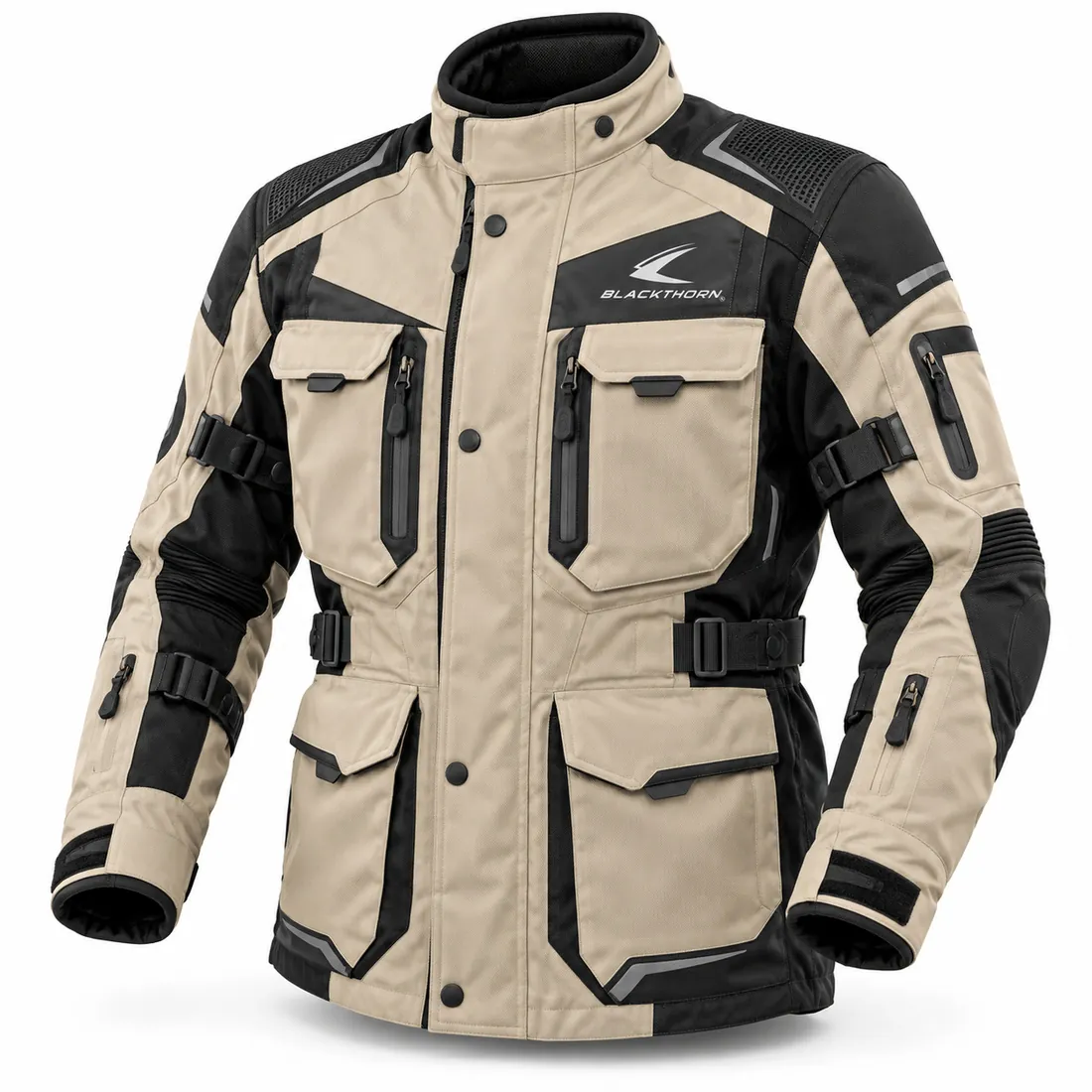
Why EN 17092 exists
Before 2020, motorcycle clothing in Europe was mostly tested to EN 13595, a standard written for professional riders. EN 17092 replaced it with a wider system that rates everyday riding gear as well as race leathers. Each class combines three things: how well the garment resists abrasion in a slide, which impact zones must carry armour, and how strong the seams and fabric are.
The five EN 17092 classes
| Class | Standard part | Abrasion protection | Impact protectors required | Typical garments |
|---|---|---|---|---|
| AAA | EN 17092-2 | Highest | Shoulders, elbows, knees and hips | Leather race suits, heavy-duty touring suits |
| AA | EN 17092-3 | High | Shoulders, elbows, knees and hips | Touring and adventure jackets and pants, heavier leather |
| A | EN 17092-4 | Moderate (minimum level) | Shoulders, elbows and knees; hips optional | Urban jackets, mesh jackets, riding jeans, hoodies |
| B | EN 17092-5 | Same as class A | None | Garments designed to be worn with separate armour |
| C | EN 17092-6 | No minimum | Holds impact protectors in place | Armoured base layers and under or over garments |
A higher class usually means heavier, stiffer and warmer gear. A mesh summer jacket built for comfort will typically target class A, while a one-piece leather suit for track days aims for AAA.
How a garment gets its class
- Design and materials. The brand picks shell fabrics, seam construction and armour zones for the target class.
- Laboratory testing. An accredited lab runs impact abrasion, seam burst, tear strength, dimensional stability and restraint tests from EN 17092-1.
- Certification and marking. In the EU the garment is Category II PPE, so a notified body issues a type-examination certificate. The label then shows the class and a pictogram.
A class belongs to a tested style, not to a factory. That is why we never label a garment with a class it has not been tested for.
Which material reaches which class?
| Material | Typical class reached | Notes |
|---|---|---|
| Cowhide leather, about 1.1–1.3 mm | AAA or AA | Best abrasion resistance per weight |
| High-denier textile (500–1000D) with reinforcement | AA or A | Weatherproof with a membrane; four-season use |
| Mesh with reinforced zones | A | Maximum airflow for hot climates |
| Protective or lined denim | A | Looks like normal jeans; knee and hip armour pockets |
What to specify on a private-label order
- Target class for each garment and the markets it will be sold in.
- Shell and reinforcement fabrics at the shoulders, elbows, seat and knees.
- Armour: pocket sizes and whether protectors are supplied, with their EN 1621 level (see our CE armour guide).
- Seam construction: double or triple stitching in impact zones.
- Labelling: class pictogram and size label only after testing.
- Testing route: which accredited lab and who holds the certificate.
Blackthorn World builds riding jackets, pants, jeans and hoodies to your specification with pockets sized for CE EN 1621-1 and EN 1621-2 armour, and supplies the technical file a lab needs. We can arrange EN 17092 testing for your brand on request.
Related guides and pages
Frequently asked questions
What is EN 17092?
EN 17092 is the European standard for motorcycle protective garments. It rates jackets, pants, suits and jeans in classes AAA, AA, A, B and C according to abrasion resistance, impact protection and seam strength.
What is the difference between class AA and class A?
AA garments must resist abrasion for longer and carry armour at the shoulders, elbows, knees and hips. Class A is the minimum level, and hip armour is optional.
Is EN 17092 required in the UK and Europe?
Motorcycle protective clothing sold as PPE in the EU must be certified, and EN 17092 is the standard used to show conformity. Great Britain uses the equivalent UKCA route.
Can a factory claim EN 17092 for all its jackets?
No. A class applies only to a specific style that has passed testing at an accredited lab.
Can Blackthorn World arrange EN 17092 testing?
Yes. We build to your target class with CE armour pockets and can arrange testing for your brand on request.