Hunting clothing layering guide: base, mid and shell layers
How a three-layer hunting system works, which fabrics and insulation suit stalking, stand hunting and driven hunts, and what outfitters and brands should specify for a private-label hunting range.
By Hamza Gosha, Director Sales & R&D · Updated 12 October 2026
In short
Hunting clothing works best as three layers: a moisture-wicking base layer, an insulating mid layer such as fleece or synthetic fill, and an outer shell chosen for the weather, either softshell, waxed cotton or a waterproof hardshell. Active hunts need breathable, lighter layers; static hunts need more insulation. Quiet brushed faces matter for bowhunting, and colour depends on the market: camo in North America and Australia, solid earth tones across the Nordics, Germany, the UK and Ireland, and blaze orange where driven-hunt rules require it.
- Layer 1
- Base layer: wicks sweat (synthetic knit or wool)
- Layer 2
- Mid layer: traps heat (fleece, synthetic fill, down)
- Layer 3
- Shell: blocks wind and rain (softshell, waxed cotton, hardshell)
- Quiet fabrics
- Brushed polyester, tricot, micro-fleece
- Colours
- Custom or licence-free camo, solid earth tones, blaze orange
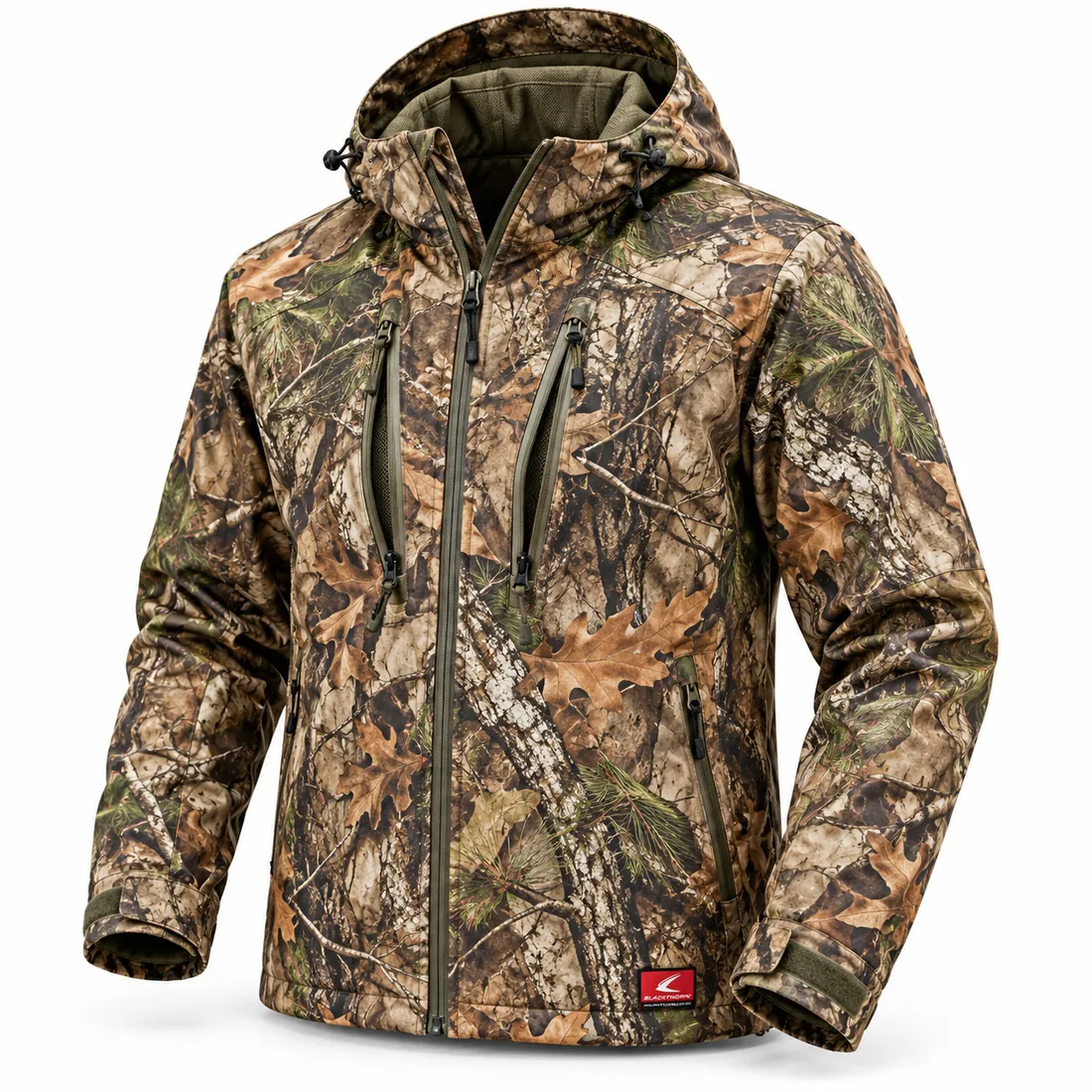
Why layering works
Hunting swings between hard effort and long periods sitting still. One heavy jacket is too hot on the walk in and too cold on the stand. Separate layers let a hunter add or remove warmth as activity and weather change, and keep sweat moving away from the skin so it does not chill them later.
The three layers
| Layer | Job | Typical fabrics | Tips |
|---|---|---|---|
| Base | Moves sweat off the skin | Polyester or polypropylene knit, merino wool | Fitted, flat seams; avoid cotton next to the skin |
| Mid | Traps warm air | Fleece 100–300 g/m², synthetic fill, down | Add or remove as activity changes |
| Shell | Blocks wind, rain and brush | Softshell, waxed cotton, laminated hardshell | Pick quiet faces for bow and close-range hunting |
Choosing the outer shell
| Softshell | Waxed cotton | Hardshell (membrane) | |
|---|---|---|---|
| Waterproof | Water-resistant (DWR) | Shower-resistant; re-wax over time | Fully waterproof, rated by water column |
| Breathability | Highest | Low to moderate | Moderate |
| Noise | Quiet | Quiet once worn in | Can rustle unless a brushed face is used |
| Best for | Active stalking, changing weather | Driven hunts and rough shooting | Sustained rain, waterfowl, stand hunting |
Insulation for static and cold hunts
| Insulation | Warmth for weight | When wet | Best use |
|---|---|---|---|
| Down | Highest | Loses loft unless treated or shelled | Cold, dry, static hunting |
| Synthetic filament | Good | Keeps most of its warmth | Wet cold, active and static |
| Fleece | Moderate | Warm when damp; dries fast | Mid layers; very quiet |
| Merino or wool knit | Moderate | Warm when damp; resists odour | Base and mid layers |
Quiet fabrics
Smooth nylon and polyester rustle against branches and each other. For bowhunting and close stalking, brushed polyester, knitted tricot faces and micro-fleece are much quieter. Hardshells can be quiet too when the membrane is laminated to a brushed face.
Camo, solid colours or blaze orange?
| Custom or open camo | Solid earth tones | Blaze orange | |
|---|---|---|---|
| Concealment | Breaks up the outline; match the terrain | Good for stalking and driven hunts | None; it is a safety colour |
| Main markets | North America, Australia and NZ | Nordics, Germany, UK and Ireland | Driven hunts; check local rules |
| Pattern rights | Use your own or a licence-free pattern; licensed patterns need a licence | None needed | Often reversible with camo |
Layering by hunt type
- Spot-and-stalk: light base layer, thin fleece, breathable softshell; pack a light rain shell.
- Stand or blind hunting: warm base layer, heavy fleece or insulated mid layer, quiet insulated outer layer.
- Driven hunts: base layer, fleece, waxed or membrane jacket with blaze orange panels where required.
- Waterfowl: base layer, insulated mid layer, waterproof hardshell or bib.
What outfitters and brands should specify
- The hunt types and climate the range is for.
- Shell fabric, face (brushed or smooth) and waterproof rating if a membrane is used.
- Insulation type and weight for each piece.
- Colours: your own camo, a licence-free pattern or solid earth tones.
- Features: game pocket, cartridge loops, two-way zips, hood, knee and seat reinforcement.
Blackthorn World makes complete private-label hunting layering systems, from base layers to waterproof shells, in custom or licence-free camo and solid colours, with a minimum of 50 pieces per style.
Related guides and pages
Frequently asked questions
What are the three layers of hunting clothing?
A wicking base layer next to the skin, an insulating mid layer such as fleece or synthetic fill, and an outer shell that blocks wind, rain and brush.
Which hunting jacket fabric is quietest?
Brushed polyester, knitted tricot and micro-fleece faces are the quietest; smooth nylon rustles.
Is down or synthetic insulation better for hunting?
Down is warmest for its weight in dry cold; synthetic insulation keeps more warmth when wet and suits damp climates.
Do European hunters wear camo?
Many hunters in the Nordics, Germany, the UK and Ireland prefer solid olive, brown and loden colours, with blaze orange for driven hunts. Camo is more common in North America, Australia and New Zealand.
What is the minimum order for private-label hunting clothing?
Blackthorn World makes hunting garments from 50 pieces per style.