UPF 50+ fishing shirts explained: ratings, fabrics and testing
What UPF ratings mean, how sun-protective clothing is tested in Australia, Europe and the USA, which fabrics and features matter on the water, and what fishing brands should specify.
By Hamza Gosha, Director Sales & R&D · Updated 12 October 2026
In short
UPF (ultraviolet protection factor) measures how much UV radiation a fabric blocks. UPF 50+ is the top category and lets through roughly 2% of UV or less. Ratings are tested to AS/NZS 4399 in Australia and New Zealand, EN 13758 in Europe and AATCC 183 in the USA. Fabric density, colour and fibre matter more than thickness. Blackthorn World makes private-label fishing shirts and sun hoodies in UPF 50+ fabric, sublimated with your graphics and sponsors.
- UPF 15–24
- Good: about 93–96% of UV blocked
- UPF 25–39
- Very good: about 96–97%
- UPF 40–50+
- Excellent: 97.5% or more
- Tests
- AS/NZS 4399, EN 13758-1/-2, AATCC 183
- Fabric
- Tightly knit polyester, vented panels, quick-dry
- Products
- Fishing apparel: shirts, sun hoodies, jackets, vests, bibs
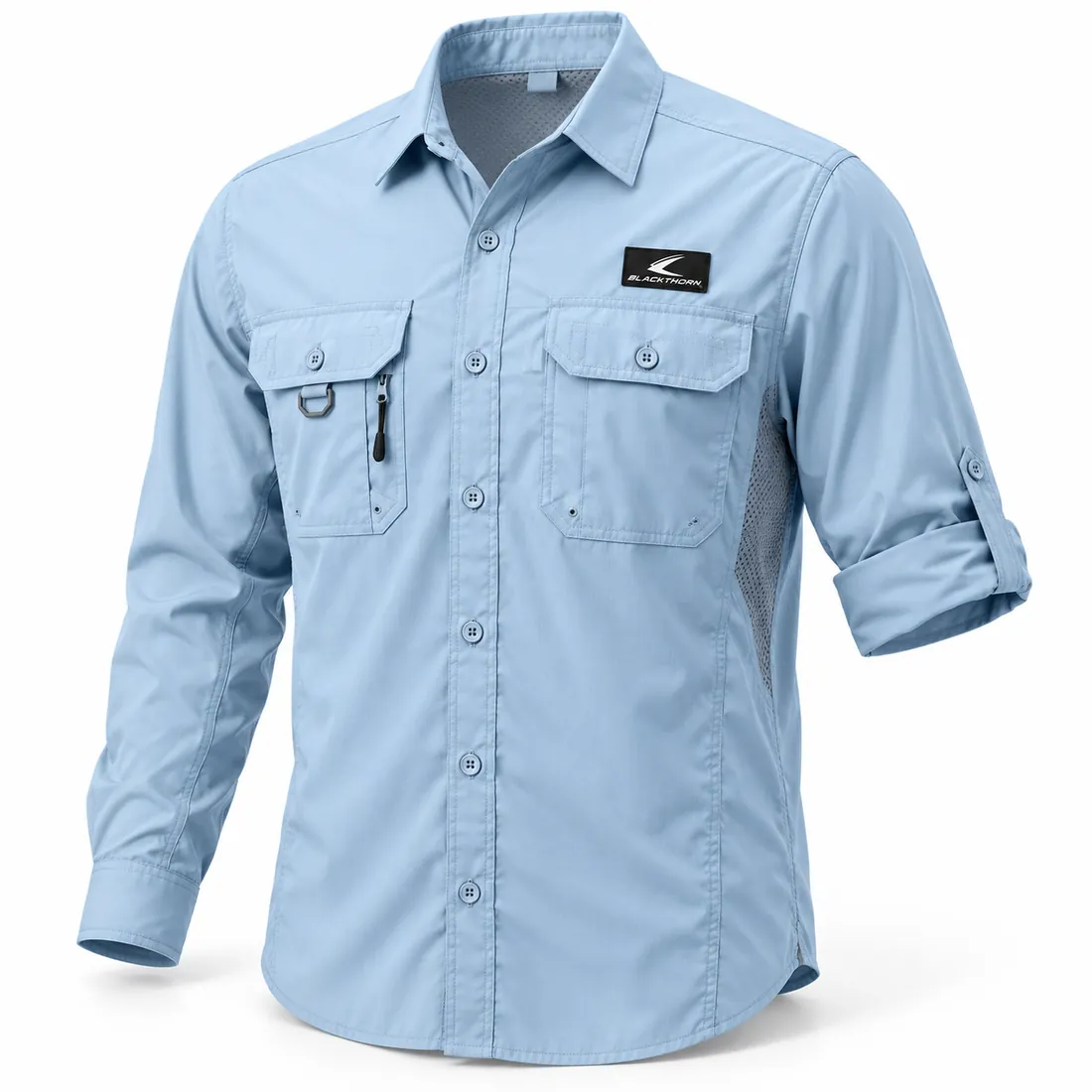
What UPF means
UPF tells you what fraction of ultraviolet radiation gets through a fabric. A UPF 50 shirt lets through about one fiftieth (2%) of the UV that reaches it. It measures both UVA and UVB, unlike SPF, which is used for sunscreen and mainly reflects UVB burning.
UPF rating categories
| UPF | Protection category | UV blocked |
|---|---|---|
| 15–24 | Good | About 93–96% |
| 25–39 | Very good | About 96–97% |
| 40–50+ | Excellent | 97.5% or more (UPF 50+ is about 98% or more) |
How UPF is tested
| Market | Standard | Notes |
|---|---|---|
| Australia and New Zealand | AS/NZS 4399 | The original UPF standard; the label shows the rating and category |
| Europe and UK | EN 13758-1 (test) and EN 13758-2 (classification and marking) | Garments marked UPF 40+ must meet coverage rules |
| USA | AATCC 183 with ASTM D6544 and D6603 | Includes testing after simulated washing and wear |
A UPF rating applies to a tested fabric and garment. Brands should keep the test report for the fabric they use and label the product to the market's standard.
What makes a fabric protective
- Tight construction: a dense knit or weave leaves fewer gaps for UV to pass through.
- Fibre: polyester blocks more UV than cotton of the same weight.
- Colour: darker and brighter dyes absorb more UV, although well-made light fabrics can still reach UPF 50+.
- Stretch and wetness: stretched or wet fabric can lose some protection, so fit matters.
Features fishing buyers ask for
- Vented back and underarm panels for airflow.
- Hoods, face masks or neck gaiters for full coverage.
- Thumb loops and long sleeves to protect the hands and wrists.
- Quick-dry, moisture-wicking knit and anti-odour finishes.
- Full sublimation for brand graphics, tournament sponsors and anglers' names.
What to specify on a private-label order
- Fabric and the UPF rating you need on the label, and the market standard to test to.
- Fit, sleeve length, hood or mask, and vent positions.
- Graphics, sponsor layout and colours for sublimation.
- Sizes: men's, women's and youth.
Blackthorn World makes fishing shirts, sun hoodies, waterproof jackets, vests and bib overalls for brands, tackle shops and tournaments, with a minimum of 50 pieces per style.
Related guides and pages
Frequently asked questions
What does UPF 50+ mean?
UPF 50+ means the fabric lets through about 2% of ultraviolet radiation or less, the highest protection category.
Is UPF the same as SPF?
No. UPF rates fabrics and covers both UVA and UVB; SPF rates sunscreen and mainly measures protection from UVB burning.
How is UPF tested?
In Australia and New Zealand to AS/NZS 4399, in Europe to EN 13758, and in the USA to AATCC 183 with ASTM methods.
Does a UPF shirt lose protection when wet?
Some fabrics lose a little protection when wet or stretched, so a well-fitted, tightly knit fabric is important.
Can fishing shirts carry tournament sponsors?
Yes. Sponsors, graphics and names are sublimated into the fabric with no limit on colours.