Sublimation vs screen printing vs embroidery
Six ways to put your logo and design on custom apparel — what each one is, which fabrics it works on, and when to use it.
In short
Sublimation dyes the whole design into polyester and suits full-color teamwear. Screen printing lays ink on top and suits bold logos on cotton and blends. Embroidery stitches the logo in thread for a premium, durable finish on polos, jackets and caps. Heat transfer, tackle twill and silicone or rubberised logos cover the cases in between. Blackthorn World runs sublimation, embroidery, screen printing, heat transfer and silicone printing in its own factory, so one order can combine methods.
- Sublimation
- Polyester fabrics; unlimited colors; all-over designs
- Screen print
- Cotton, blends and polyester; bold spot colors
- Embroidery
- Polos, jackets, caps, bags; premium finish
- Other
- Heat transfer, tackle twill, silicone and rubberised logos
- In-house
- Sublimation, embroidery, screen and heat transfer, silicone printing
- Production
- Blackthorn World’s own factory — export orders only
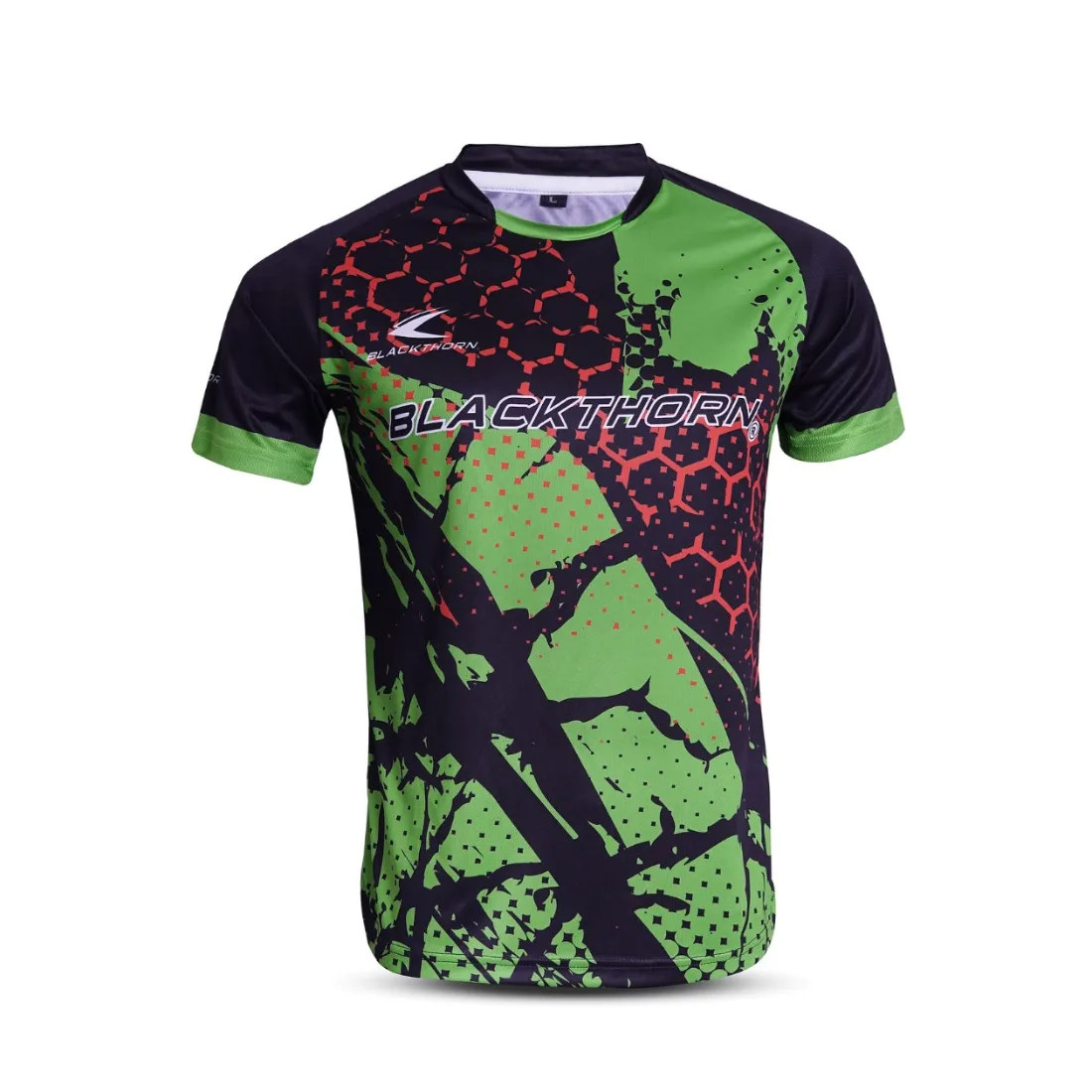
The methods compared
| Method | How it works | Best on | Use it for |
|---|---|---|---|
| Sublimation | Design printed on transfer paper, then heat turns the ink to gas and dyes it into the fibre | Polyester and poly-rich fabrics, white or light base | Full-color jerseys, all-over prints, sponsor-heavy kits |
| Screen printing | Ink pushed through a mesh screen, one screen per color | Cotton, fleece, blends and polyester | Bold logos on hoodies, T-shirts and training wear |
| Heat transfer | Printed or cut film pressed onto the garment | Most fabrics, including nylon and softshell | Names, numbers, small logos, hi-vis and outerwear |
| Embroidery | Logo stitched in thread | Piqué, fleece, twill, heavier knits and wovens | Polos, jackets, caps, bags and blazers |
| Tackle twill | Twill fabric shapes cut and stitched on | Hockey, football and baseball jerseys, varsity jackets | Classic crests, names and numbers |
| Silicone / rubberised | Raised silicone or rubber logos applied with heat | Performance fabrics, outerwear, fightwear | Raised 3D logos and grip details |
How to choose
- Many colors, gradients or photos? Sublimation on polyester — the color count does not change the cost.
- Cotton garment? Screen print or embroidery; sublimation needs polyester.
- Dark polyester garment? Screen print, heat transfer or embroidery, because sublimation ink shows only on light backgrounds.
- Premium club or corporate look? Embroidery on polos, jackets and caps.
- Heritage hockey, football or varsity style? Tackle twill.
- Fast-changing names and numbers? Heat transfer or sublimated numbers.
Durability and care
Sublimated designs are part of the fabric, so they do not crack, peel or fade from washing. Embroidery and tackle twill are very hard-wearing. Screen prints and transfers last well when washed inside out at moderate temperatures and kept away from high tumble-dry heat.
Combining methods
Most club and brand ranges mix methods: sublimated match shirts, embroidered polos and jackets, screen-printed cotton hoodies and heat-transfer names. Because Blackthorn World runs these in one factory, a full range can be developed, sampled and shipped as one order.
Related guides and pages
Frequently asked questions
What is the difference between sublimation and screen printing?
Sublimation dyes the design into polyester fabric, so it allows unlimited colors and never cracks or peels. Screen printing lays ink on top of the fabric one color at a time and works on cotton, blends and polyester.
Can you sublimate on cotton?
Not well. Sublimation bonds with polyester fibres, so it needs polyester or poly-rich fabric with a white or light base. Cotton garments are screen printed or embroidered instead.
Is embroidery or printing better for polo shirts?
Embroidery gives polos a premium, durable finish and is the usual choice for club and corporate polos. Printing suits large logos or sublimated designs on performance polos.
Which decoration lasts longest?
Sublimation and embroidery are the most durable: sublimated designs are part of the fabric and embroidery is stitched in. Screen prints and transfers last well with gentle washing.
Can one order use several decoration methods?
Yes. Blackthorn World runs sublimation, embroidery, screen printing, heat transfer and silicone printing in its own factory, so one order can combine them.