Combat uniform manufacturer: ripstop fabrics, camo printing and combat shirts explained
Combat and field uniforms are specified to the detail: fabric, shade, print and stitch density are written into tenders. Here is how those garments are built and what a supplier has to control.
Published 27 October 2026 · Blackthorn World
In short
Combat uniforms are made from polycotton or nylon-cotton ripstop in solid shades or printed camouflage, and include field jackets, field shirts, combat shirts with breathable "ubac" torsos for wear under body armour, and combat trousers with knee-pad pockets. Blackthorn World makes combat-style apparel for uniform suppliers, airsoft, outdoor and security brands from 50 pieces per style, from about $13 per combat shirt FOB.
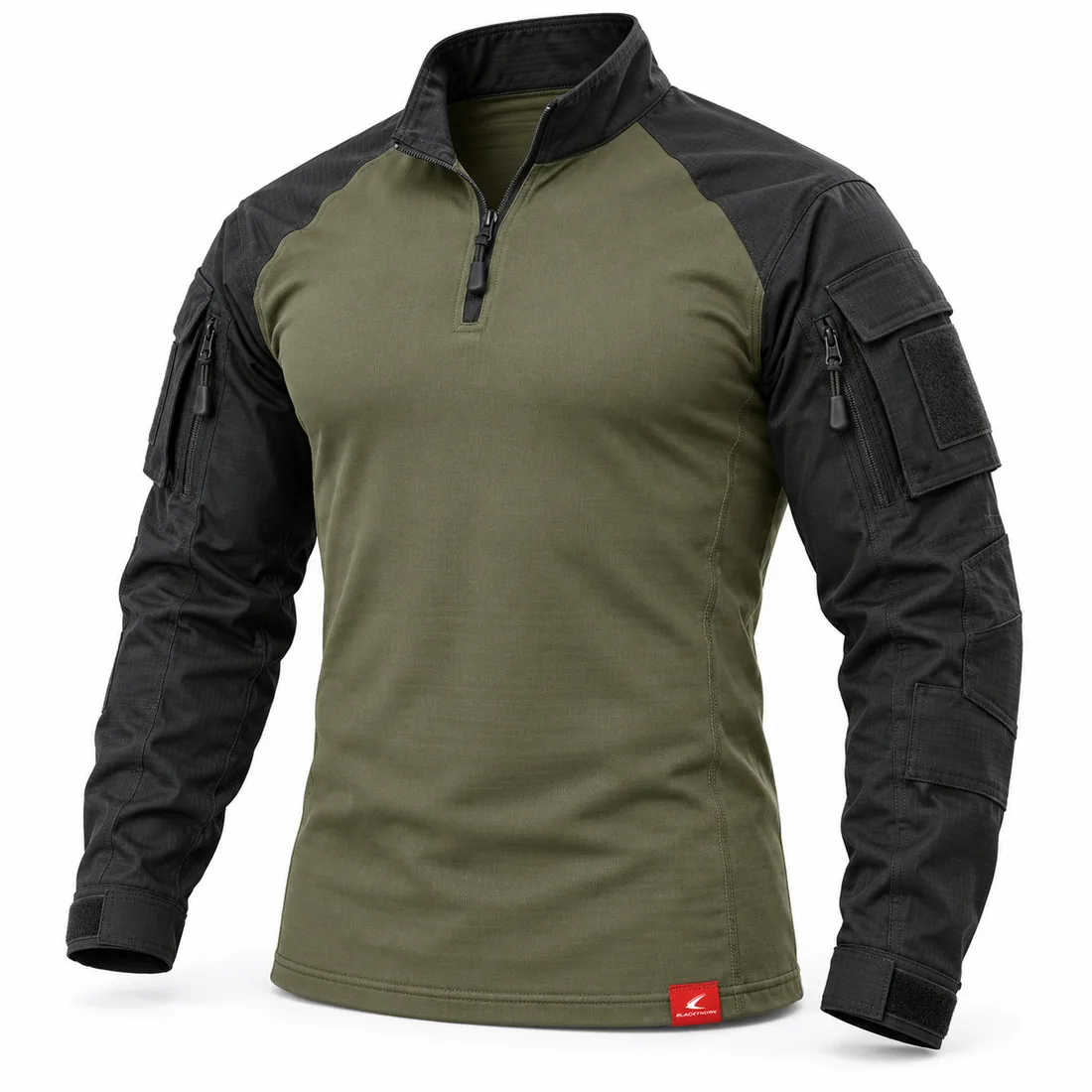
The garments in a combat uniform
| Garment | Construction |
|---|---|
| Combat shirt (ubac) | Wicking knit torso for wear under armour; ripstop sleeves with elbow pads and shoulder pockets |
| Field shirt / blouse | Ripstop, button or zip front, chest and sleeve pockets |
| Field jacket | Ripstop or windproof shell, hood, multiple pockets (see our coyote ripstop field jacket) |
| Combat trousers | Ripstop, articulated knees, knee-pad pockets, cargo pockets, reinforced seat (see woodland camo combat trousers) |
| Base layers and T-shirts | Wicking polyester, optional anti-odour finish |
Why ripstop?
Ripstop fabric has a heavier reinforcing yarn woven in a grid, so a small tear cannot run. Polycotton ripstop (typically 65/35) balances durability and comfort; nylon-cotton (NYCO) blends are tougher and used in demanding programmes. Weights of roughly 180–240 GSM cover shirts to trousers.
Camouflage printing and shade control
Camo is printed onto the fabric, and the shade is controlled against approved references — buyers often supply a reference swatch or a shade card. For programmes that require near-infrared (IRR) performance, the dyes and print have to be specified and tested for it. Solid shades — olive, coyote, ranger green, khaki, black — are controlled the same way, so that reorders match previous stock.
Who buys combat-style apparel from us?
Uniform suppliers and distributors, security companies, airsoft and shooting-sports brands, and outdoor brands with a military-inspired line. Requirements written into a tender — fabric, shade, labels, packaging — are built into the tech pack before sampling. We do not name programmes or clients; private-label work stays under NDA.
Price, MOQ and lead time
Combat shirts start at about $13 FOB, combat trousers at about $14 and ripstop field jackets at about $20, from 50 pieces per style. Samples take 10–12 working days and bulk 2–3 weeks after approval. See the tactical trousers and shirts range, ghillie suits and camouflage, tactical gloves, our tactical clothing guide and the tactical and combat gloves guide.
FAQ
What is a combat shirt?
A shirt with a breathable knit torso for wear under body armour, and durable ripstop sleeves with elbow pads and pockets.
What fabric are combat uniforms made from?
Usually polycotton or nylon-cotton ripstop, around 180–240 GSM, in solid shades or printed camouflage.
Can you match a camo shade to our reference?
Yes. Shades are controlled against your approved swatch or shade card; IRR requirements must be specified up front.
What is the MOQ for combat uniforms?
50 pieces per style, with sizes mixed.
How much does a combat shirt cost?
From about $13 FOB; combat trousers from about $14 and field jackets from about $20.
Also in other languages: العربية