Custom hi-vis safety vests in bulk: Class 2 vs Class 3, mesh vs solid, and logo printing for construction and road crews
Safety vests are the highest-volume item in most PPE programmes. This guide covers the choices that matter when you order branded vests in bulk for construction, road works, logistics and events.
Published 27 October 2026 · Blackthorn World
In short
A bulk hi-vis safety vest order comes down to visibility class (ANSI/ISEA 107 Class 2 or 3, EN ISO 20471 Class 1–2), fabric (mesh for heat, solid for print), closure (zip, hook-and-loop or breakaway), pockets and branding. Blackthorn World makes custom vests with your logo from 100 pieces per style and about $3 per vest FOB.
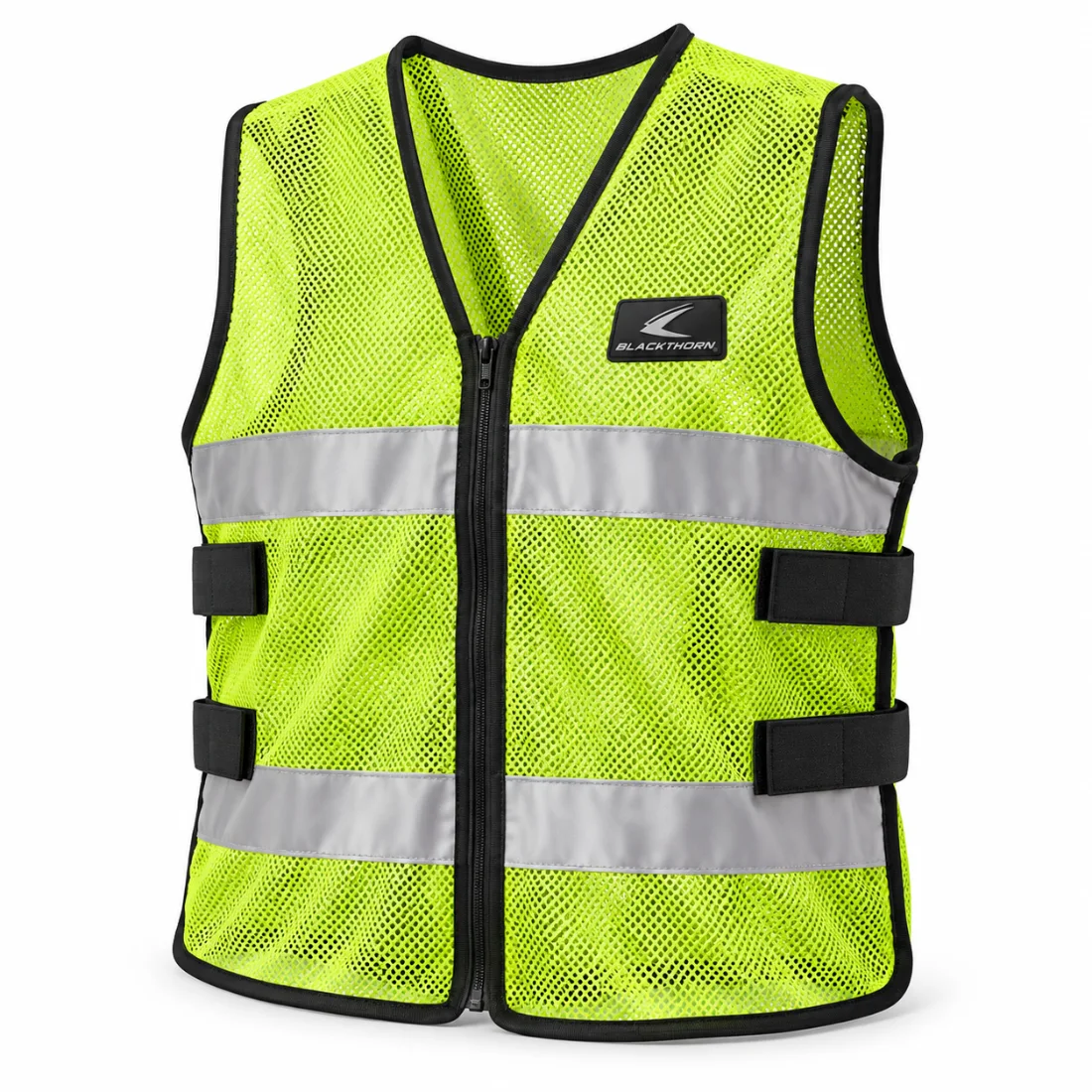
Class 2 or Class 3: which do your crews need?
Under the US standard ANSI/ISEA 107, Class 2 vests are the minimum for workers near traffic below about 50 mph and for most construction, parking and logistics work. Class 3 adds sleeves or more background and reflective area and is required for high-speed road work and poor visibility. Sleeveless vests generally cannot meet Class 3 on their own. In Europe, the UK and the Gulf, EN ISO 20471 uses Class 1–3; a standard vest usually reaches Class 1 or 2 depending on its size and tape layout. For the full comparison see our EN ISO 20471 vs ANSI 107 guide.
Mesh or solid fabric?
| Mesh polyester | Solid (tricot) polyester | |
|---|---|---|
| Best for | Hot climates, summer, active work | Logo printing, rain, cooler climates |
| Breathability | High | Moderate |
| Print quality | Good on solid panels only | Sharp, large back prints |
| Durability | Good | Very good |
Many buyers combine them: solid front and back panels for printing, with mesh sides or a mesh back yoke for airflow. For the Gulf, Australia and southern US states, an all-mesh vest is usually the right default.
Closures, pockets and options
- Zip front — the neatest look and best fit; standard for branded company vests.
- Hook-and-loop — cheapest and fastest to put on; common for visitors and events.
- Five-point breakaway — tears away if caught on machinery or vehicles; asked for in utilities and roadside work.
- Pockets — radio loop, pen slots, ID badge window, chest and lower pockets; see our hi-vis tool vest for a fully pocketed version.
- Colours — fluorescent yellow and orange as standard; two-tone yellow/navy or orange/navy for supervisor ranks.
How do you brand a safety vest?
Screen print and heat transfer are the usual methods for company names on the back; embroidery is used for small chest logos on solid panels. Keep logos off the reflective tape, and keep them small enough that they do not cut into the minimum background area your class requires. For security companies, a large "SECURITY" or "STEWARD" back print is standard — see our security vest guide.
Price, MOQ and certification
Custom vests start at about $3 per vest FOB at the 100-piece minimum per style, rising with zips, pockets, breakaway and premium tape. Garment certification to EN ISO 20471 or ANSI/ISEA 107 is done per design at an accredited test lab using certified reflective tape; we arrange it on request and quote it with the sample. Development samples take 10–12 working days and bulk 2–3 weeks after approval.
See the full hi-vis vests range, hi-vis jackets and tops, and our workwear manufacturer page.
FAQ
What is the difference between Class 2 and Class 3 safety vests?
Under ANSI/ISEA 107, Class 2 suits most construction and work near traffic below about 50 mph; Class 3 adds more visible area, usually with sleeves, for high-speed road work and poor visibility.
Mesh or solid safety vests?
Mesh for heat and active work; solid fabric for sharp logo printing and cooler or wet conditions. Many buyers mix both.
What is the minimum order for custom safety vests?
100 pieces per style, with sizes mixed.
How much does a custom hi-vis vest cost?
From about $3 per vest FOB, rising with zips, pockets, breakaway closures and premium tape.
Are the vests certified?
Certification is per design at an accredited lab with certified tape; we arrange EN ISO 20471 or ANSI/ISEA 107 testing on request.
Also in other languages: العربية